


Flavour and nutrients: it all starts with the feed
Haymilk comes with a host of benefits that are largely due to how it is produced. Not only is the flavour unique and a source of that particular quality of products like Haymilk cheese, it is also especially rich in important ingredients.

Pure nature
Hay farming has always been characterized by sustainable thinking and action built on generations. The focus is on milk production with locally available resources. The particularly gentle farming methods of Haymilk farmers help preserve nature compared with industrial dairy farming and make an important contribution to preserving valuable soils and protecting biodiversity.
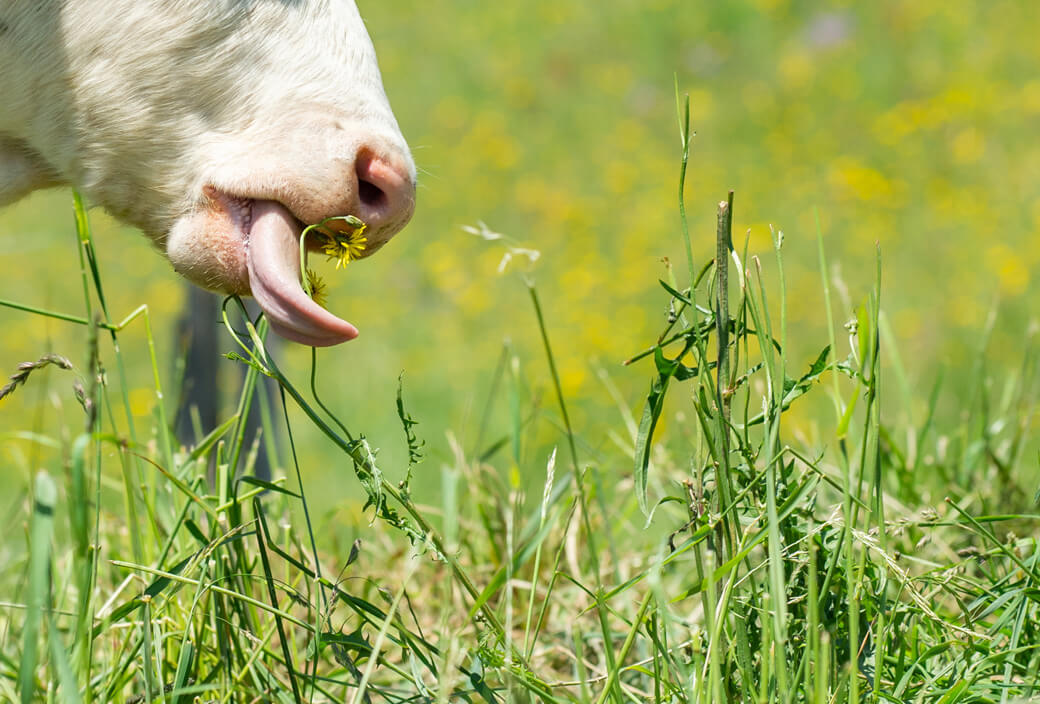
Greater variety – more flavour
The diversity of flora found in fields, meadows and alpine pastures is a key factor in creating the particular quality and flavour of hay milk. These areas are home to a wealth of grasses and herbs. They are also a real paradise for Haymilk animals like cows, goats and sheep and the basis for producing high-quality Haymilk.
Whether it’s meadow fescue, white clover, cocksfoot, meadow foxtail, red clover, vetch or dandelion, to name but a few: nature provides a rich and varied diet. The hay milk animals are not the only ones who taste the difference. After all, the richer the biodiversity, the better the aroma and quality of the raw milk.
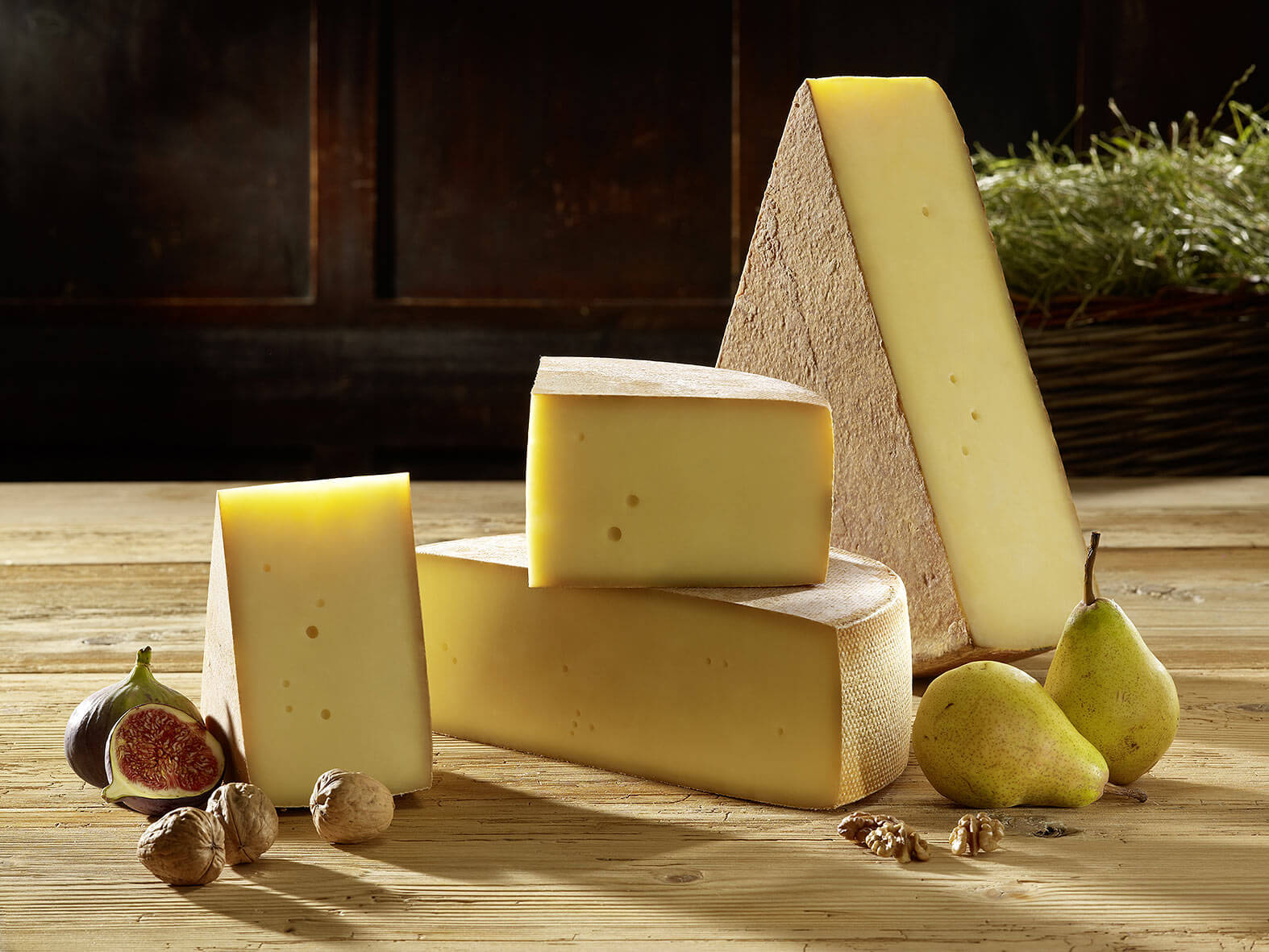
A first-class natural resource
Haymilk cattle feed species-appropriately throughout the year on fresh grasses and herbs in summer and hay in winter, which is reflected in the high quality of milk. This valuable natural resource is refined into a variety of dairy products and remains memorable thanks to its delicious flavour. Master cheese makers also trust in Haymilk.
After all, the cheese can be produced without added preservatives or intense mechanical processing by consistently dispensing with fermented feed. The quality of the milk is also particularly important for cheeses that are matured for a long time. Only a high-quality raw material can be used to make cheese that is suitable for a longer maturing process.
Haymilk possesses these attributes and is therefore the ideal raw material for cheese specialities.
Good for the body and soul
An investigation conducted by the University of Natural Resources and Applied Life Sciences in Vienna confirms it: Haymilk products contain around twice as much omega-3 fatty acids and conjugated linoleic acids (CLA) as conventional dairy products. Omega-3 fatty acids are among the polyunsaturated fatty acids that our body cannot produce itself. Haymilk products can therefore make a valuable contribution to a balanced diet and a healthy lifestyle.